
Beyond Surface: The Dynamics of Veneer Color Resilience
In the delicate interplay between elegance and endurance, the capability of dental restorations to maintain their initial appeal over time is crucial. Advanced materials now lead the charge, offering exceptional resilience to external factors, ensuring the longevity and brilliance of these aesthetic enhancements in dentistry.
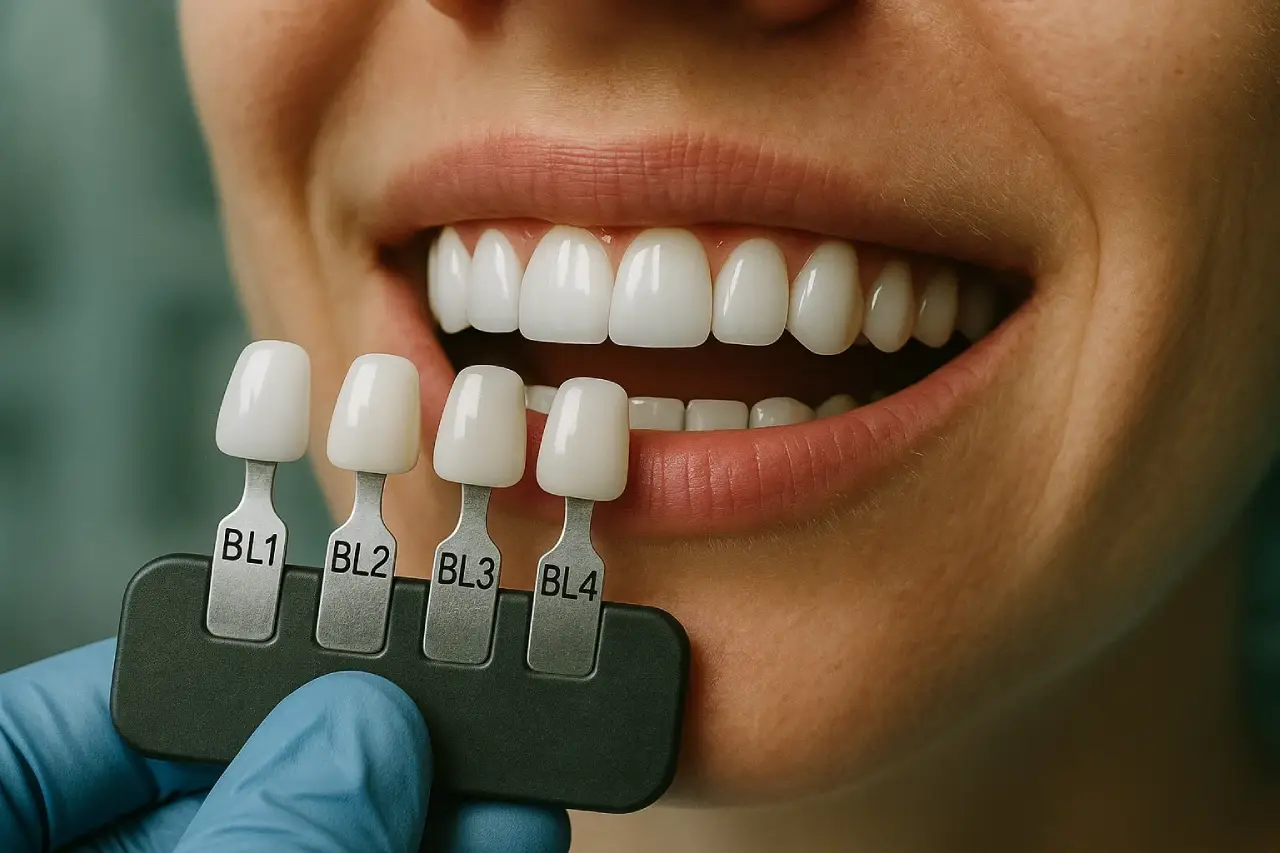
The Foundation of Color: Material Science and Stability
The Evolution from Metal to Monolithic Purity
The secret to maintaining a pristine aesthetic appearance for decades lies primarily in the selection of the foundational material. Historically, restorative dentistry relied heavily on metal-based substructures layered with porcelain. While functional, these materials posed a significant aesthetic risk over time: corrosion and oxidation. As the years passed, the metal oxides would often leach out, or gum tissue would naturally recede, revealing a tell-tale dark line at the gingival margin. This "black line" effectively ruined the illusion of a natural tooth, creating a stark, artificial boundary that many patients found distressing.
In contrast, the modern era of dentistry has been revolutionized by high-strength ceramics and zirconia. These materials represent a paradigm shift because they are intrinsically white or tooth-colored throughout their entire structure. There is no dark metal core to hide. This optical consistency means that even if the gum line naturally recedes due to aging, there is no jarring color discrepancy or dark shadow revealed at the root. Furthermore, materials like zirconia possess excellent biocompatibility, encouraging pink, healthy gum tissue rather than the inflammation sometimes caused by base metals. This biological harmony is essential, as the redness of inflamed gums can negatively alter the perceived color of the white restoration. By choosing metal-free options, patients invest in a solution that mimics the light-handling properties of natural enamel—translucency, opalescence, and fluorescence—ensuring that the smile remains indistinguishable from nature for the long term.
Chemical Inertness and Resistance to Chromatic Attack
Beyond the structural base, the long-term color stability of a veneer is dictated by its surface chemistry and its ability to repel external pigments. Clinical data and material research consistently highlight that modern lithium disilicate and zirconia ceramics exhibit superior chemical stability compared to their composite resin predecessors. When we consume highly pigmented foods and beverages—such as espresso, red wine, berries, or turmeric—our teeth are subjected to a chromatic assault. Natural enamel is somewhat porous and can absorb these stains over time. However, high-quality ceramic veneers function similarly to glass; their surfaces are extremely dense and non-porous.
This high density creates a formidable barrier against stain absorption. The "glaze" layer applied to the final restoration acts as a microscopic shield, preventing pigments from penetrating the material matrix. While a composite resin material might slowly absorb fluids and swell—leading to a yellowing effect known as hygroscopic expansion—ceramics remain inert. They do not react chemically with mouth fluids or dietary acids in a way that degrades their color. This is why patients often report that while their natural teeth may darken with age or habits, their veneers retain the exact shade they had on the day of cementation. This permanent brightness serves as a benchmark for the smile, although it also underscores the need to keep adjacent natural teeth whitened to match the enduring brilliance of the restoration.
| Feature | Metal-Fused Porcelain (Traditional) | All-Ceramic / Zirconia (Modern) |
|---|---|---|
| Core Material Color | Dark Grey / Metallic | White / Translucent |
| Gum Line Appearance | Risk of "black line" if gums recede | Natural transition, no dark margins |
| Light Transmission | Opaque core blocks light flow | Translucent, mimics natural tooth optics |
| Biocompatibility | Low to Moderate (potential for inflammation) | High (promotes healthy, pink gum tissue) |
| Long-term Color Risk | Metal oxidation may shadow the tooth | Extremely low; chemically stable material |
The Hidden Dynamics of Light and Environment
The Subsurface Influence: When the Glue Matters
While the ceramic shell itself is virtually color-stable, the "canvas" it sits upon plays a massive role in the final visual result. Veneers are often contact-lens thin, characterized by beautiful translucency. This translucency is what gives them a lifelike vitality, allowing light to pass through and scatter just like natural enamel. However, this optical property is a double-edged sword: it means the underlying structure is visible. The final color is a combination of the ceramic shade, the underlying tooth structure, and, crucially, the resin cement used to bond them together.
Over a span of 10 to 15 years, the resin cement layer can undergo subtle changes. Unlike the ceramic, the resin is a polymer that can be susceptible to aging, specifically through water sorption and hydrolysis. If the microscopic seal at the edge of the veneer is not perfectly maintained, fluids can seep into the cement layer, causing it to discolor or yellow. Because the veneer is translucent, a yellowing cement layer will filter the light reflecting back to the eye, making the entire tooth appear warmer or darker than it actually is. This phenomenon highlights that color stability isn't just about the porcelain; it is a "systemic" stability involving the tooth, the bond, and the ceramic. Protecting this bond requires minimizing exposure to harsh temperature fluctuations and maintaining excellent hygiene to prevent the breakdown of the marginal seal.
Surface Texture and the Physics of Reflection
The perception of color is fundamentally an interaction between light and surface texture. When a veneer is brand new, it is polished to a mirror-like smoothness. This smoothness ensures "specular reflection," where light bounces off the surface in a unified direction, creating a high-gloss, wet look that we associate with healthy, youthful teeth. This gloss adds depth and vibrancy to the color. However, the oral environment is harsh. Daily chewing, acidic foods, and abrasive brushing can introduce micro-textures to the surface over years.
If the surface becomes roughened—even at a microscopic level invisible to the naked eye—the way light interacts with the tooth changes. The surface begins to exhibit "diffuse reflection," scattering light in random directions. This makes the veneer look flatter, duller, and less vibrant, even if the internal color hasn't changed. Furthermore, a roughened surface increases the surface area for stain retention. Micro-scratches act as valleys where microscopic pigments can lodge, which are difficult to remove with a toothbrush alone. Therefore, preserving the "glassy" finish is not just about shine; it is an integral part of color maintenance. If the surface integrity is compromised, the restoration loses its ability to self-clean and reflect light dynamically, leading to a perception of aging that has nothing to do with the actual shade of the material.
Orchestrating Longevity Through Care
Navigating the Critical Settlement Period
The journey to lasting aesthetics begins the moment the patient leaves the dental chair. The longevity of the bond—and by extension, the color stability provided by a healthy seal—is heavily influenced by the first few weeks of wear. During this initial integration phase, the cement is reaching its final cure and the gums are adapting to the new contours of the teeth. It is a period where the restoration is most vulnerable to mechanical stress.
Dental professionals strongly advise a "soft diet" protocol during this window. Avoiding hard, crunchy, or sticky foods prevents micro-movements that could disrupt the bonding interface before it is fully matured. Excessive force during this settling period can create microscopic gaps at the margin. These gaps are the entry points for stain-causing bacteria and pigments later in life. Additionally, minimizing the intake of extreme staining agents like curry, dark soy sauce, or tobacco during the first 48 to 72 hours is critical, as the interface is most susceptible to uptake during this time. Treating the new smile with mindfulness in the early days sets the stage for a durable, hermetic seal that protects the visual integrity of the veneers for decades.
Tools and Techniques for Sustained Brilliance
Once the restoration has settled, the focus shifts to daily maintenance. The goal of home care for veneers is contradictory to common belief: you do not need to scrub hard to get them clean. In fact, aggressive scrubbing is the enemy of aesthetics. The most common cause of surface dulling is the use of abrasive "whitening" toothpastes. These pastes often contain silica or charcoal particles designed to scratch stains off natural enamel, but on a veneer, they act like sandpaper, stripping away the glaze and leaving the surface vulnerable to dullness and staining.
Instead, the ideal maintenance routine involves non-abrasive gel toothpastes and ultra-soft manual or electric toothbrushes. The objective is to disrupt the biofilm without scratching the ceramic glass. Furthermore, professional maintenance plays a pivotal role. Regular dental visits allow for professional repolishing. If daily wear has caused slight dulling, a dentist can use diamond polishing pastes to restore the original high-gloss luster, effectively "resetting" the light-reflecting properties of the veneer. This professional intervention, combined with gentle home care, ensures that the color remains stable and the surface remains hostile to stain accumulation.
| Maintenance Aspect | Recommended Practice | Practices to Avoid |
|---|---|---|
| Toothpaste Selection | Non-abrasive gels, low RDA (Relative Dentin Abrasivity) | Charcoal pastes, coarse "whitening" baking soda pastes |
| Brushing Tool | Soft or extra-soft bristle brushes; gentle electric modes | Hard bristles; aggressive scrubbing force |
| Dietary Habits | Rinsing with water after coffee/wine; using straws | Chewing ice or hard candy; leaving stains on teeth overnight |
| Professional Care | Regular polishing with diamond paste; margin checks | DIY scaling tools; skipping annual check-ups |
Q&A
-
What factors contribute to ceramic pigment stability in dental applications?
Ceramic pigment stability in dental applications is influenced by the chemical composition of the pigments, the firing temperature during processing, and the environmental conditions they are exposed to, such as moisture and light. Ensuring that pigments are compatible with the ceramic matrix and resistant to chemical changes over time is crucial for long-term aesthetic performance.
-
How does resin cement aging affect dental restorations?
Resin cement aging can significantly impact dental restorations by altering the mechanical properties and adhesion quality. Over time, factors like thermal cycling, water absorption, and chemical degradation can lead to a reduction in bond strength and an increase in micro-leakage, potentially compromising the longevity of restorations.
-
What is the importance of UV exposure resistance in dental materials?
UV exposure resistance is essential in dental materials to prevent discoloration and degradation when exposed to sunlight or artificial UV light. Materials with high UV resistance maintain their aesthetic qualities and structural integrity over time, which is particularly important for visible restorations like veneers and crowns.
-
How do stain absorption dynamics affect the appearance of dental ceramics?
Stain absorption dynamics are crucial in determining how dental ceramics will maintain their appearance over time. Factors such as surface porosity, glaze quality, and exposure to staining agents like coffee or tobacco can influence how quickly and severely ceramics absorb stains. Proper surface treatment and regular maintenance can mitigate these effects.
-
In what ways does surface roughness influence the performance of dental materials?
Surface roughness plays a significant role in the performance of dental materials by affecting their aesthetic appearance and functional longevity. Rough surfaces can lead to increased plaque accumulation and wear on opposing teeth, while smoother surfaces enhance the material's resistance to staining and microbial colonization, promoting better oral hygiene and durability.