
Exploring the Diverse World of Dentures

Losing natural teeth no longer means sacrificing function or appearance. Advances in dental prosthetics have created a wide range of solutions that restore chewing efficiency, speech clarity, and facial support. Understanding how different denture designs work helps patients make informed, long-term oral health decisions.
Exploring the Diverse World of Dentures

The Role of Dentures in Oral Rehabilitation

Dentures are removable or fixed prosthetic devices designed to replace missing teeth and surrounding tissues. They play a critical role not only in aesthetics but also in maintaining oral structures and overall health.

Restoring Function and Facial Structure

When teeth are lost, the jawbone gradually resorbs due to lack of stimulation, which can alter facial contours and lead to a collapsed appearance. Dentures help distribute occlusal forces during chewing, supporting facial muscles and improving masticatory function. Properly fitted prostheses can also enhance phonetics by stabilizing tongue and lip movements during speech.

Materials and Fabrication Techniques

Modern dentures are typically fabricated from acrylic resins, metal frameworks, or advanced polymer blends. Acrylic resin remains common due to its adaptability and ease of adjustment, while cobalt-chromium alloys are often used in partial denture frameworks for strength and reduced bulk. Digital impressions and computer-aided design/manufacturing (CAD/CAM) technologies have further improved fit accuracy and patient comfort.

Full Dentures and Their Clinical Applications

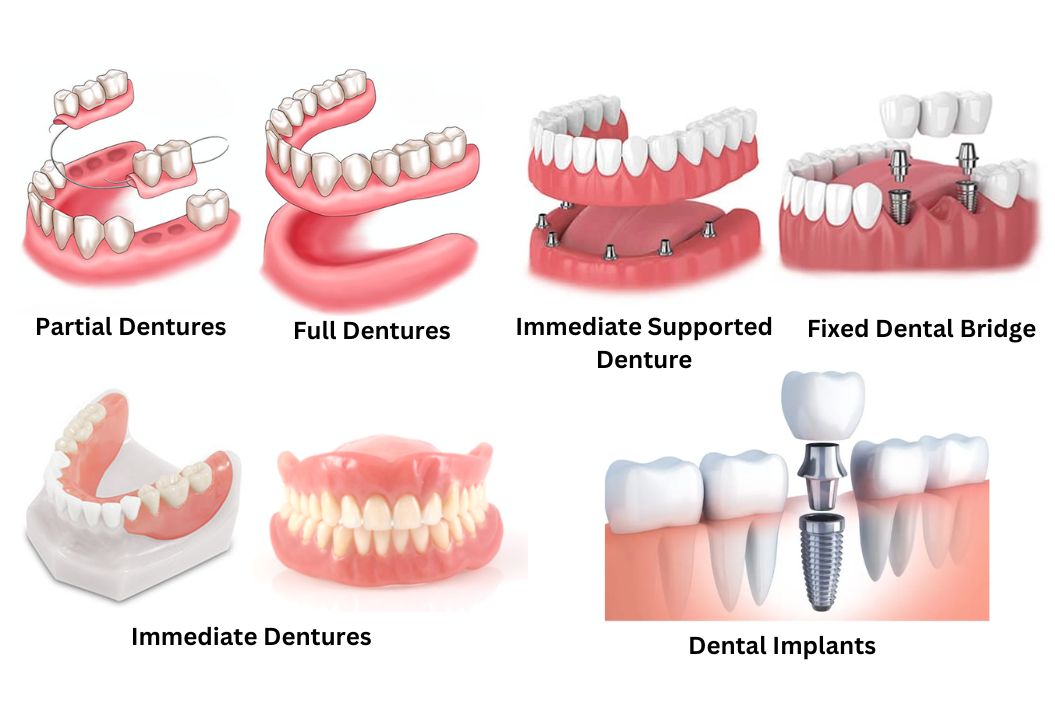
Full Dentures are designed for patients who have lost all natural teeth in one or both arches. They rely on soft tissue support and precise adaptation to remain stable during function.

Conventional Full Dentures

Conventional full dentures are fabricated after the remaining teeth have been extracted and the oral tissues have healed. This healing phase allows for more predictable impressions and jaw relations. The final prosthesis is designed to balance occlusion and maximize retention through anatomical landmarks such as the alveolar ridge and palate.

Immediate Dentures

Immediate Dentures are placed directly after tooth extraction, allowing patients to avoid a period without teeth. While they offer immediate aesthetic and functional benefits, they often require relining or adjustment as the underlying tissues heal and remodel. These dentures are commonly used as transitional prostheses before a definitive restoration is made.

Partial Dentures for Targeted Tooth Replacement

Partial Dentures are used when some natural teeth remain. They are designed to fill gaps while preserving existing dentition.

Traditional Partial Dentures

Traditional partial dentures consist of replacement teeth attached to a metal or acrylic base, anchored by clasps that engage the remaining natural teeth. The design aims to distribute functional loads evenly while maintaining periodontal health of the abutment teeth.

Flexible Partial Dentures

Flexible Partial Dentures are made from thermoplastic materials that provide enhanced comfort and aesthetics. Their flexibility allows for a more natural appearance, as the base often blends with gingival tissues. These dentures are especially suitable for patients who are sensitive to metal components or who require a more adaptable prosthetic option.

Implant-Supported Dentures and Overdentures

Implant dentistry has transformed removable prosthetics by providing enhanced stability and bone preservation.

Implant-Supported Dentures

Implant-Supported Dentures are anchored to dental implants placed within the jawbone. This approach significantly improves retention and chewing efficiency compared to tissue-supported designs. Because implants stimulate the underlying bone, they also help reduce long-term bone resorption.

Overdentures

Overdentures are removable prostheses that fit over dental implants or retained tooth roots. They combine the removability of traditional dentures with the stability of fixed support structures. Attachments such as locator systems or bars are commonly used to enhance retention while allowing for easy removal during hygiene routines.
Denture Approach Stability Level Maintenance Considerations Typical User Profile
Conventional removable dentures Moderate Regular adjustments and relining Patients seeking non-surgical solutions
Implant-Supported Dentures High Implant hygiene and periodic evaluations Patients prioritizing stability and function
Overdentures High to very high Attachment maintenance Patients balancing removability with support

Clinical Considerations When Choosing Denture Types

Selecting the appropriate denture type involves evaluating multiple clinical and lifestyle factors.

Oral Health and Bone Condition

The quantity and quality of alveolar bone influence whether implants can be placed or whether a tissue-supported denture is more suitable. Soft tissue health, salivary flow, and ridge morphology also affect denture retention and comfort.

Lifestyle and Adaptation Factors

Patients with active lifestyles or high functional demands may benefit from more stable solutions such as implant-supported designs. Adaptation time varies; some individuals adjust quickly, while others require extended follow-up visits for occlusal refinement and comfort adjustments.
Decision Factor Why It Matters Denture Types Commonly Considered
Bone support Determines feasibility of implants Implant-Supported Dentures, Overdentures
Aesthetic expectations Influences material and design Flexible Partial Dentures, Full Dentures
Manual dexterity Affects ability to remove and clean Fixed or semi-removable options
Long-term maintenance Impacts follow-up frequency All denture categories

Long-Term Care and Maintenance of Dentures

Proper care extends the lifespan of dentures and protects oral tissues.

Daily Cleaning and Hygiene

Dentures should be cleaned daily using non-abrasive cleansers to prevent plaque and biofilm accumulation. Natural teeth and implants supporting dentures require meticulous oral hygiene to reduce the risk of peri-implant disease or caries.

Professional Follow-Up and Adjustments

Regular dental evaluations allow for early detection of fit issues, wear, or tissue changes. Over time, relining or rebasing may be necessary to maintain proper adaptation as the oral structures evolve.

Q&A

  1. What are Full Dentures best suited for?

    Full Dentures are most appropriate for individuals who have lost all natural teeth in one or both arches. They restore basic chewing function, support facial structure, and improve speech when properly designed and adjusted.

  2. How do Partial Dentures differ from Flexible Partial Dentures?

    Traditional partial dentures often use metal frameworks and clasps, while Flexible Partial Dentures rely on thermoplastic materials. The flexible option typically offers improved comfort and aesthetics but may not provide the same level of rigidity for certain bite conditions.

  3. Are Immediate Dentures a permanent solution?

    Immediate Dentures are usually considered a transitional option. As healing progresses and tissue contours change, they often require relining or replacement with a definitive prosthesis for long-term use.

  4. What advantages do Implant-Supported Dentures provide?

    Implant-Supported Dentures offer superior stability, improved chewing efficiency, and reduced bone resorption compared to tissue-supported dentures. They are particularly beneficial for patients who struggle with denture movement.

  5. How are Overdentures different from fixed implant prostheses?

    Overdentures are removable and attach to implants or retained roots using specialized connectors. This design allows for easier cleaning while still providing enhanced stability compared to conventional removable dentures.