
From Autoclaves to PPE: The Pillars of Dental Infection Control
In the intricate realm of dental care, maintaining a pristine and hazard-free environment is paramount for practitioners and patients alike. Effective methodologies ensure safety and hygiene, protecting against potential health risks while fostering an atmosphere of trust and professionalism within dental settings.
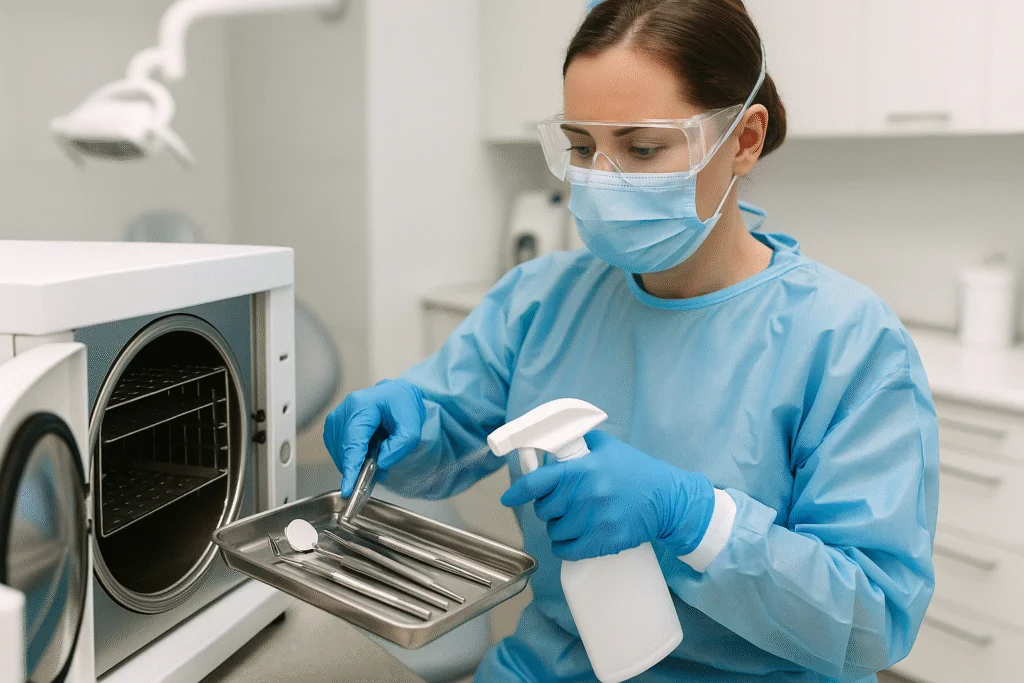
The Heart of Hygiene: Advanced Instrument Care
High-Pressure Steam and the Vacuum Seal
In any reputable dental clinic, the sterilization room serves as the central hub of safety operations. While patients rarely see this area, it houses the most critical piece of equipment in the fight against contamination: the high-pressure steam sterilizer. Cleaning dental instruments involves far more than a simple wash with soap or a dip in disinfectant solution, as these methods are often insufficient against resilient microscopic pathogens. To ensure absolute safety, clinics rely on a process that subjects instruments to a vacuum state followed by high-temperature steam under immense pressure.
One might compare this machine to a kitchen pressure cooker, but the technology involved is exponentially more sophisticated and powerful. The device works by evacuating air from the chamber to create a vacuum, allowing steam to penetrate every microscopic crevice of the metal instruments and heat-resistant plastics. This process effectively obliterates bacteria, viruses, and spores that could otherwise survive standard cleaning. By cycling instruments through this rigorous procedure, practitioners ensure that every tool entering a patient's mouth has been completely reset to a sterile state. This level of rigor is not merely a recommendation; it is the baseline requirement for preventing the transmission of illness and maintaining a clinical environment where healing can happen without risk.
The Critical Role of Sterile Packaging
The effectiveness of a high-performance sterilizer is entirely dependent on the preparation steps taken before the machine is even turned on. This is where the meticulous art of "packing" comes into play. If a sterilized instrument were to be removed from the machine and immediately exposed to the open air, it would instantly lose its sterile status. To prevent this re-contamination, instruments are thoroughly washed, dried, and then sealed into specialized medical-grade pouches before entering the sterilization chamber.
These pouches serve a dual purpose. First, they allow steam to penetrate the paper side during the sterilization cycle while maintaining a sealed barrier against the outside environment once the cycle is complete. This means the instruments remain in a state of suspended sterility until the exact moment they are needed for treatment. Second, these packs are equipped with chemical indicators—small markings that change color only when specific conditions of heat and pressure have been met. This visual confirmation offers peace of mind to both the dental team and the patient. When a dentist opens a sealed packet in front of you, it is a deliberate demonstration that the tools being used are safe, verified, and untouched since their purification.
Shielding Practitioners and Patients
Donning the Armor: Everyday Protective Barriers
In the daily routine of a dental practice, the equipment worn by the staff acts as the first line of defense against invisible threats. This gear, often referred to in clinical terms, serves as a physical "suit of armor" designed to block the transmission of microorganisms between the patient and the care provider. This goes beyond a simple uniform; items like gloves and fluid-resistant gowns are engineered to interrupt the chain of infection. For any procedure involving fluids, choosing the right material is crucial. Practitioners must rigorously inspect gloves for even the slightest micro-tears or degradation before use, as integrity is key to safety.
Furthermore, the selection of this gear is governed by strict regulatory standards. Items used in patient care, such as gloves or protective eyewear, must meet specific quality benchmarks set by health authorities to ensure they provide an effective barrier. This extends to the use of sterile, single-use items for invasive procedures. By adhering to these protocols, the dental team ensures that they are not only protecting themselves from occupational hazards but are also preventing any potential cross-contamination that could affect the patient. This reliable physical separation is foundational to modern medical safety.
| Protective Gear Category | Primary Function | Typical Usage Scenario |
|---|---|---|
| Standard Barrier Protection | Prevents direct contact with fluids and mucous membranes. | Routine check-ups, cleanings, and fillings. |
| Surgical & Sterile Gear | Creates an aseptic field to prevent deep tissue infection. | Implant placement, extractions, and oral surgery. |
| Radiation Safety Gear | Shields vital organs (thyroid, reproductive) from X-ray scatter. | During all radiographic imaging procedures. |
| High-Filtration Respiratory Wear | Filters out aerosols and airborne particulates. | Aerosol-generating procedures (e.g., ultrasonic scaling). |
Handling Sharp Instruments with Precision
Beyond soft barriers, the management of sharp objects and specialized equipment requires a heightened level of discipline. Dental procedures often involve needles, scalpel blades, and other sharp implements that pose a significant injury risk if mishandled. The safety protocol here is strict and non-negotiable: the moment a sharp item has served its purpose, it must be immediately segregated from the working area. This prevents accidental punctures, which are a primary vector for blood-borne pathogen transmission.
Clinics utilize specialized, puncture-resistant containers for this specific type of waste. These containers are designed to be permanently locked once full, ensuring that hazardous materials are sealed away and cannot be retrieved. The placement of these containers is also strategic—they must be within arm's reach of the treatment zone to minimize the distance a sharp object travels through the air. Alongside physical disposal, the "mental software" of the staff is updated through continuous training. Teams practice "no-touch" techniques and strictly avoid dangerous habits like recapping needles by hand. This combination of engineered safety devices and rigorous behavioral habits minimizes the risk of accidents, ensuring the clinical environment remains safe for everyone.
Pure Water and Environmental Safety
Combating the Invisible Biofilm
A hidden challenge in dental offices lies within the dental chair itself—specifically, the long, narrow tubing that delivers water to the handpieces and scalers. Because these tubes are incredibly thin, water can stagnate when the unit is not in use, such as overnight or during weekends. This stagnation creates an ideal breeding ground for bacteria to adhere to the inner walls of the tubing, forming a slimy layer known as biofilm. This is similar to the slippery coating found on river rocks and is notoriously difficult to remove with simple rinsing.
If left unmanaged, this biofilm can detach and contaminate the spray used during treatment, potentially exposing patients to high levels of bacteria. Therefore, maintaining the microbiological quality of dental water is a critical, albeit often unseen, aspect of infection control. Modern clinics address this by moving away from municipal water supplies for direct treatment, instead utilizing independent water reservoirs (bottles) filled with distilled or treated water. This disconnects the chair from the complexities of city plumbing and gives the clinic total control over the liquid entering the patient's mouth.
Responsible Maintenance and Waste Protocols
To combat biofilm and ensure water purity, clinics employ a "flush and treat" strategy. Mechanical flushing involves running water through the lines for distinct periods between patients to expel stagnant fluid and loose particulates. However, because flushing alone cannot strip away established biofilm, it is combined with chemical shock treatments—periodic flushing of the lines with powerful antimicrobial agents that strip the tubing walls clean.
| Maintenance Action | Frequency | Objective |
|---|---|---|
| Line Flushing | Between every patient (20-30 seconds). | Expels retracted fluids and planktonic (floating) bacteria. |
| Shock Treatment | Weekly or Monthly (depending on usage). | Chemically destroys established biofilm on tubing walls. |
| Water Quality Testing | Quarterly or Bi-annually. | Verifies bacterial counts are below safety thresholds (<500 CFU/mL). |
| Filter Replacement | Per manufacturer guidelines. | Ensures physical filtration barriers remain effective. |
Beyond water, the philosophy of safety extends to the disposal of clinical waste. It is not enough to simply throw things away; waste must be categorized based on its potential hazard. Data logging plays a surprising role here—tracking the volume and type of waste generated helps clinics refine their safety protocols and ensures compliance with environmental laws. Touch-free waste bins and color-coded disposal systems prevent cross-contamination during the cleanup process. By treating waste management as a data-driven, precise science rather than a janitorial afterthought, dental facilities protect not only their patients but also the wider community and ecosystem.
Q&A
-
What is autoclave sterilization and why is it important in healthcare settings?
Autoclave sterilization is a process that uses high-pressure saturated steam to sterilize equipment and instruments. It's crucial in healthcare settings because it effectively eliminates all forms of microbial life, including spores, which helps prevent cross-infection and ensures the safety of both patients and healthcare workers. -
How does Personal Protective Equipment (PPE) contribute to cross-infection prevention?
Personal Protective Equipment (PPE), such as gloves, masks, gowns, and eye protection, acts as a barrier between healthcare workers and potential infectious agents. By wearing PPE, healthcare workers can prevent the transmission of infectious agents from patient to patient, and from patients to themselves, thereby reducing the risk of cross-infection. -
What are the recommended practices for waterline decontamination in dental clinics?
Waterline decontamination involves regularly cleaning and disinfecting the waterlines used in dental procedures. Recommended practices include using chemical agents specifically designed for dental waterlines, flushing lines daily, and testing water quality regularly to ensure it meets safety standards, thereby preventing microbial contamination. -
Why is sharps management critical in medical settings, and what are some best practices?
Sharps management is essential to prevent needlestick injuries, which can lead to the transmission of bloodborne pathogens such as HIV and hepatitis. Best practices include using sharps containers for disposal, never recapping needles, and employing safety-engineered devices. Training staff on proper handling techniques is also critical to enhance safety. -
What are the guidelines for clinical waste disposal to ensure environmental safety?
Clinical waste disposal involves segregating waste into appropriate categories such as sharps, infectious waste, and non-hazardous waste. Proper labeling, using color-coded bags, and ensuring waste is treated and disposed of in accordance with local regulations are essential. These guidelines help minimize environmental impact and reduce the risk of contamination.